

 Current position >About Us
Natural Gas Flow Meters for Industrial Furnace and Fuel Supply Line Energy Audits
Quick Answer
For furnace fuel lines, choose a thermal mass flow meter for low flow pilot lines and small burners. Choose a vortex flow meter with pressure and temperature compensation for main gas headers from DN25 to DN200. Choose a Coriolis mass flow meter for high accuracy audits that need direct kg/h output.
Why Gas Flow Data Changes an Energy Audit
An energy auditor cannot prove burner efficiency without gas flow data. Furnace temperature, stack oxygen, and product throughput tell only part of the story. Gas flow at the fuel supply line shows how much energy enters the furnace. Without that number, the audit becomes a rough estimate.
A 10 MW industrial furnace burning natural gas at 35.8 MJ/Nm3 consumes about 1000 Nm3/h at full load. A 5 percent error in gas flow at that rate equals 50 Nm3/h. Over a 6000 hour working year, that error hides a large amount of energy cost.
Meter Types for Furnace Gas Lines
A thermal mass flow meter reads direct mass flow in kg/h or Nm3/h. It suits low pressure fuel lines and small burners. Typical sizes range from DN15 to DN50. It has good low flow sensitivity and can measure 0.5 kg/h on a pilot line. It does not need separate pressure and temperature transmitters for mass flow, but pressure and temperature help for audit logging.
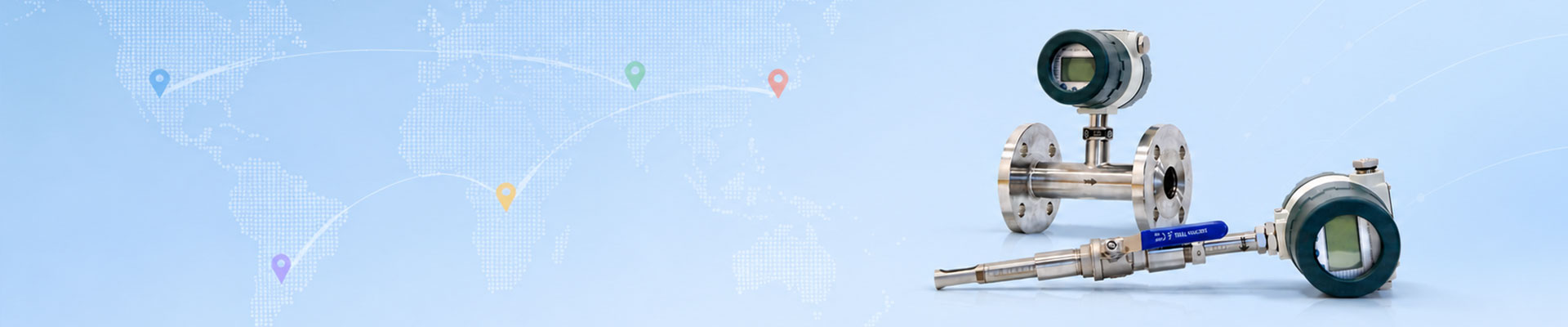
A vortex flow meter fits main gas headers and larger burners. Silver Instruments supplies inline vortex meters from DN25 to DN200. Accuracy in natural gas service is about 1.0 percent of reading. You must add pressure and temperature compensation for standard volume or energy data. Use a 4-20 mA HART output with a pressure transmitter and a PT100.
A Coriolis mass flow meter gives 0.2 percent rate accuracy for high accuracy audits or gas composition changes. It reports kg/h directly. Sizes from DN15 to DN80 cover most fuel gas test skids. The pressure drop is higher than a thermal meter, so check the supply pressure before you choose this option.
Pressure and Temperature Compensation
Natural gas volume changes with pressure and temperature. A volume reading in actual m3/h is not the same as standard m3/h or energy flow. If fuel line pressure rises from 1 bar g to 3 bar g, mass and energy flow can double while an uncompensated volume meter reads nearly the same. A 3 °C change in gas temperature shifts standard volume by about 1 percent.
Do not skip compensation during an audit. Install a pressure transmitter and PT100 near the flow meter. Connect the signals to a flow computer or a paperless recorder with built in math. Use 4-20 mA HART outputs so the data can be read by PLC and audit tools.
Installation Details that Matter
Most engineers know the basics but often ignore straight run. A vortex meter in gas service needs about 15D upstream and 5D downstream. A thermal mass flow meter usually needs 10D upstream and 5D downstream. Coriolis meters do not need long straight runs, but they do not like pipe vibration.
Do not install the meter directly after a pressure regulator or control valve. The gas flow there is unstable. Put the meter after a short straight section and before the burner header. If the furnace area is classified, choose ATEX Zone 1 or Zone 2 rated electronics.
Recommended Meters and Settings
Silver Instruments supplies several options for natural gas audits. For pilot and small burner lines, use a thermal mass flow meter. Configure it for natural gas and 4-20 mA HART output. For main supply lines, use an inline vortex flow meter with built in pressure and temperature compensation if possible. For a reference meter or high accuracy test, use a Coriolis mass flow meter with DN15 to DN80 sensors.
Set the flow range close to the actual burner demand. Do not install a DN100 meter on a line that runs at 40 Nm3/h