

 Current position > Product detail
『Gas Flow Meter Welding Controls: Optimizing Argon and CO2 Shielding Rates for TIG and MIG Lines』Related information(flow rotameter|digital flow meter|balo meter|hydraulic flow meter|volumetric meter|positive displacement meter|pitot tube flow meter|displacement meter|cfm meter|variable area flow meter|inline flow meter|differential pressure flow meter|calibrated flow meter|velocity meter|paddle wheel flow meter|oval gear flow meter|anemometer hvac|multiphase flow meter|doppler flow meter|thorpe tube flowmeter|heat flow meter)
Gas Flow Meter Welding Controls: Optimizing Argon and CO2 Shielding Rates for TIG and MIG Lines
Quick Answer
Install a thermal mass flow meter on each argon and CO2 supply header for repeatable weld shielding gas. Typical setpoints are 10 to 20 L/min argon for TIG and 15 to 25 L/min CO2 or mixed gas for short circuit MIG. Silver Instruments supplies direct mass flow meters with DN15 or DN25 connections, 4-20 mA HART output, and no moving parts for weld gas control.
Why Weld Gas Control Starts at the Flow Meter
Most shops still use a glass tube rotameter with a needle valve. The operator sets a float ball and writes the number on a job sheet. Here is the thing. As cylinder pressure drops or multiple welders share one manifold, actual gas flow drifts. A float tube also reads in local conditions, not mass flow. Argon and CO2 density changes with temperature and pressure, so the rotameter reading may be off by 10 to 15 percent from actual gas mass delivered.
We have seen this on customer sites many times. A pipe fabricator in Indonesia ran three MIG stations from one CO2 header. At peak demand the rotameters showed 18 L/min but real flow at the nozzle fell below 12 L/min. Weld porosity increased and rework cost the plant about 6 hours per week. A thermal mass flow meter on the header gave the supervisor a live total and a 4-20 mA signal to log every shift.
Argon Flow Rates for TIG Lines
TIG welding uses argon as the primary shield. Gas cup size drives the flow rate. A number 6 cup often needs 8 to 12 L/min. A number 8 cup may need 12 to 16 L/min. Large gas lenses on pipe roots sometimes run 18 to 20 L/min. Too much argon pulls air into the arc and wastes gas. Too little argon leaves a brown or blue oxide layer on stainless steel.
Do not control argon by a pressure regulator alone. A pressure gauge shows bar or psi, but flow through a torch depends on hose length, torch valve position, and backpressure. A gas flow meter mounted close to the weld station shows what the torch actually receives. Silver Instruments thermal mass flow meters read in L/min or kg/h and include a totalizer for cylinder usage tracking.
CO2 and Mixed Gas Flow Rates for MIG Lines
Short circuit MIG with 100 percent CO2 usually needs 15 to 25 L/min at the nozzle. Spray transfer with an argon CO2 mix may need 18 to 28 L/min depending on wire diameter and travel speed. Thick carbon steel sections often use 20 to 25 L/min to keep the weld pool covered. Welding in open yards or near fans can require 25 to 30 L/min because wind strips the shielding gas away.
A shipyard in Vietnam asked Silver Instruments for a gas flow meter that could handle both argon CO2 mix and pure CO2. We supplied a thermal mass flow meter with a gas selector setting in the local display. The unit was calibrated for two gas curves and delivered 4-20 mA HART to the yard PLC. The shipyard cut CO2 waste by 18 percent in the first month because the totalizer showed leak flow during lunch breaks and shift changes.
Thermal Mass Flow Meters for Welding Gas Lines
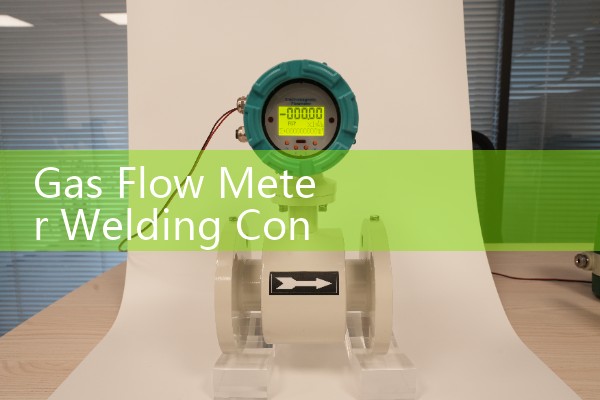
Thermal mass flow meters fit welding gas control because they measure direct mass flow without a separate temperature or pressure transmitter. They work well on argon, CO2, nitrogen, and argon CO2 mixes. A typical unit from Silver Instruments has a DN15 or DN25 inline body, 0 to 50 L/min or 0 to 100 L/min range, and a 4-20 mA HART output. Accuracy is plus or minus 1.5 percent of reading across most of the flow range.
The display shows live flow, total consumed gas, and gas temperature. The output can go to a PLC, paperless recorder
Pressure Sensors and Data Logging on Weld Gas Manifolds
Flow alone does not tell the full story. A pressure transmitter on the manifold from 0 to 10 bar gives an early warning when cylinders run low. Silver Instruments pressure transmitters use a 4-20 mA HART signal and a local display in bar or psi. Pair one with a thermal mass flow meter and a paperless recorder to log both pressure and flow per weld station.
This setup helps welding supervisors find leaks and compare gas use per shift. A food and beverage plant in Saudi Arabia reduced argon cylinder changeovers from 14 per month to 8 per month after logging flow and pressure on two TIG stainless steel pipe lines. The data showed a small leak on a gas hose that nobody saw under shop lighting.
How to Specify a Gas Flow Meter for TIG and MIG
Send Silver Instruments your gas type, pressure in bar, temperature in °C, pipe size in DN, and flow range in L/min or kg/h. For a typical TIG station, specify argon, 2 to 4 bar, 20 to 30 °C, DN15, and 0 to 30 L/min. For a MIG station running CO2, specify CO2, 2 to 5 bar, 20 to 40 °C, DN15 or DN20, and 0 to 50 L/min. We then propose a thermal mass flow meter with the correct gas calibration and process connection.
Do not use a liquid flow meter for gas. A Coriolis mass flow meter works for gas but costs more than needed for most weld stations. Electromagnetic flow meters only work on conductive liquids and will not read argon or CO2. We sell many thermal mass meters for this application because the installed cost is lower and the accuracy is enough for weld gas control.
FAQ
What gas flow meter is best for argon and CO2 shielding gas?
A thermal mass flow meter is the best fit for most TIG and MIG lines. It measures direct gas mass flow, has no moving parts, and gives a 4-20 mA HART signal for logging or PLC control.
Can one flow meter measure both argon and CO2?
Yes. Pick a unit with multiple gas calibration curves. The operator can select argon, CO2, or an argon CO2 mix from the local display or HART menu.
What are typical argon and CO2 flow rates for TIG and MIG welding?
TIG argon is usually 10 to 20 L/min depending on cup size. MIG CO2 or mixed gas is usually 15 to 25 L/min depending on transfer mode and joint thickness.
How do I send gas flow data to a PLC or data logger?
Use a thermal mass flow meter with 4-20 mA HART output. Connect the two wire loop to the PLC analog input or a paperless recorder. The display can also show totalized gas flow for shift reports.
Can Silver Instruments supply gas flow meters for ATEX welding gas racks?
Yes. Silver Instruments can supply thermal mass flow meters with ATEX Zone 1 or Zone 2 enclosures for cylinder banks and gas mixing panels. Give us the zone classification, gas type, flow range, and process connection size.
Gas Flow Meter Quote for Welding Gas Lines
Tell us your gas type, pressure in bar, temperature in °C, pipe size DN, and flow range in L/min or kg/h. Silver Instruments will reply with a quotation and lead time. Call us at +86-25-68650347 or WhatsApp +86-25-52155837. For WeChat, add +86 15365082610. We supply industrial flow meters and pressure transmitters to welding shops, pipe fabricators, and plant maintenance teams in Southeast Asia, Oceania, Latin America, Africa, and the Middle East.