

『Mineral Oil Flow Meter Calibration for Pharmaceutical Lines』Related information(flow rotameter|digital flow meter|balo meter|hydraulic flow meter|volumetric meter|positive displacement meter|pitot tube flow meter|displacement meter|cfm meter|variable area flow meter|inline flow meter|differential pressure flow meter|calibrated flow meter|velocity meter|paddle wheel flow meter|oval gear flow meter|anemometer hvac|multiphase flow meter|doppler flow meter|thorpe tube flowmeter|heat flow meter)

Mineral Oil Flow Meter Calibration for Pharmaceutical Lines
Quick Answer: In pharmaceutical mineral oil metering, calibration is not a once-a-year checkbox. It directly controls batch repeatability, FDA or EMA audit readiness, and ingredient traceability. Silver Instruments supplies oval gear and Coriolis flow meters with accredited calibration to 0.2 percent accuracy, traceable to ISO 17025. Send us your oil viscosity, pipe size (DN), temperature, and flow range and we will propose a meter plus calibration protocol that matches your validation master plan.
Why Calibration Accuracy Matters in Pharma Mineral Oil Lines
Mineral oil is used as a tablet coating lubricant, a defoamer in fermentation, and a heat transfer fluid in some API synthesis steps. In all these roles, the mass or volume delivered must stay within narrow limits. A flow meter that drifts 1.5 percent can push a batch outside its qualified design space. An auditor will check if the meter reading matches the batch record. If the calibration certificate is fuzzy or the device shows a 2 percent deviation, the batch could be quarantined.
Process engineers often overlook that mineral oil behaves differently from water at low flow rates. Its viscosity can be 20 cP, 50 cP, or even 100 cP depending on the grade and temperature. A meter calibrated on water at 22 degrees Celsius will read wrong when you push a 60-degree mineral oil through it. That is why we match the calibration fluid to your actual process liquid.
Key Variables That Affect Mineral Oil Flow Meter Calibration
Four variables decide if your meter reading is trustworthy or just a number on a screen.
Viscosity. Oval gear positive displacement meters behave linearly with viscous oil but show slip with thin fluids. At 50 cP, a well-made oval gear meter holds 0.2 percent repeatability. At 1 cP, the same meter might leak 0.8 percent. Coriolis mass flow meters are viscosity-insensitive, which is a strong advantage for multi-product biopharma lines.
Temperature. Mineral oil density changes about 0.06 to 0.09 percent per degree Celsius. For a 40-degree swing, a volumetric meter without temperature compensation can add 2.4 percent error. We integrate PT100 sensors and output mass flow compensated readings via 4-20 mA HART, or density-compensated volume when you use a Coriolis meter.
Flow range. A meter calibrated from 5 to 50 liters per hour cannot reliably measure a 0.5 liter per hour dribble at startup. In coating lines, the spray system often pulses at 2 to 3 Hz. We specify a turndown ratio that covers your minimum, normal, and maximum flow with the same calibration certificate. Usually that is 10:1 for oval gear meters and 20:1 for Coriolis.
Line pressure. Back pressure below 2 bar can cause outgassing in hot oil. The resulting two-phase flow drives a volumetric meter crazy and dampens the Coriolis oscillation. In our calibration lab, we set the fluid pressure equal to your field operating pressure, typically 1.5 to 4 bar, to replicate the net positive pressure head.
Flow Meter Technologies We Recommend for Pharma Mineral Oil
For clean mineral oil services in cGMP lines, we shortlist two instrument types.
Oval gear flow meter. Stainless steel 316L body, PEEK gears, tri-clamp or DIN 11864 aseptic connections. Full scale from 0.2 L/h to 600 L/h covers most tablet coating and depyrogenation tunnel oil lines. With a pulse output or 4-20 mA HART transmitter, it connects directly to a PLC or paperless recorder. Because it is a positive displacement meter, it tolerates viscosity swings better than turbine meters. We often supply models with an IP67 field housing and an ATEX Zone 2 option for solvent-rich atmospheres.
Coriolis mass flow meter. Straight-tube or U-tube design, electropolished to Ra 0.5 µm or better. It gives mass flow, density, and temperature in one device, which simplifies IQ/OQ documentation. A pharmaceutical customer in Thailand uses our mini Coriolis meter (DN06) to dose mineral oil into a Wurster coater at 0.15 kg/h. Density tracking gives them a real-time check on oil grade, which prevents cross-contamination between different viscosity grades.
Both meter types ship with a 5-point calibration certificate. We state the reference standard (ISO 17025 accredited mass balance or master meter), the test fluid (your mineral o
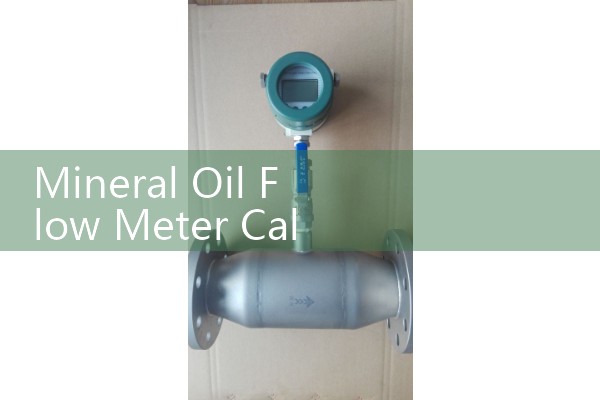
Our Calibration Procedure for Mineral Oil Flow Meters
When you send a purchase order with your process data, our lab team runs this sequence.
1. We flush the meter and the calibration loop with a matching pharmaceutical-grade white oil to remove any residual test fluid.
2. We bring the oil to your stated operating temperature, usually 40°C to 80°C, using a jacketed reservoir with a PID controller. The temperature stays within ±0.3°C of setpoint during the entire test.
3. We stabilize pressure at your field condition and degas the oil through a vacuum break.
4. A high-precision weigh scale catches the output over a timed interval. We sample at 5, 25, 50, 75, and 100 percent of full span. Each point runs three times.
5. The K-factor or meter factor is computed, and we load it into the transmitter electronics or mark it on the nameplate.
After calibration, you get a PDF certificate with traceability chain, raw data table, environmental conditions, and the calibration fluid certificate of analysis. If your QMS needs a 21 CFR Part 11 compliant digital record, we can deliver the raw data in CSV format for your e-signature workflow.
Customer Case: Calibrating a Meter for Sterile Oil Transfer in Indonesia
Last year, a sterile injectables plant near Jakarta asked us to supply two oval gear meters for a mineral oil filling line. Their specs: light white oil, 35 cP at 50°C, DN15 pipe, flow 10 to 100 L/h, pressure 2.5 bar. They needed a 4-20 mA HART output to a Siemens PLC and a calibration certificate accepted by a European inspector.
We shipped two SILVER-OG series meters in 316L with PTFE seals. Before shipment, our lab calibrated them on a medical-grade white oil with 37 cP viscosity at 50°C. The meter factor deviated less than 0.12 percent from the reference mass scale. The customer ran their own IQ/OQ and found the as-delivered error was 0.15 percent against their in-house weigh tank. They passed their audit with zero observations on the metering loop.
Frequently Asked Questions
What accuracy is required for mineral oil flow meters in pharma?
A typical GMP batch record expects ±0.5 percent of reading or better. Coating and granulating processes often tighten this to ±0.3 percent. Our standard calibration gives 0.2 percent accuracy, which leaves headroom for field drift.
Can I calibrate a flow meter on-site or must it be done in a lab?
You can run a field verification against a weigh scale, but an accredited calibration with a traceable chain of standards usually requires a lab. We provide ISO 17025 accredited calibration from our workshop. If you have a master meter on-site, we can help you write a secondary calibration SOP that GMP auditors will accept.
How often should mineral oil flow meters be recalibrated?
For high-risk operations like sterile oil filling, we suggest a 12-month interval. For less critical services like heat transfer oil loops, 24 months is common. The interval should be based on drift history, not just a calendar. If your last three calibrations show less than 0.1 percent drift, you can extend the window with a documented rationale.
Which flow meter type works best for pharmaceutical-grade mineral oil?
Oval gear meters give the best price-to-accuracy ratio for single-oil, constant-viscosity lines. Coriolis meters are better when you need mass flow, density control, or run multiple oil grades in the same pipe. Both can be calibrated to 0.2 percent. The decision depends on your budget and whether you need volume or mass billing.
What documentation do I get with a calibration certificate?
Every certificate includes the ISO 17025 logo of our partner lab, the instrument serial number, test date, calibration fluid specs, ambient and fluid temperature, pressure, measured error at each point, expanded uncertainty (k=2), and a statement of traceability. We also attach a photo of the meter under test if your qualification package requires visual evidence.
Get a calibration plan for your mineral oil line. Send us your oil type, viscosity (cP), temperature (°C), pipe size (DN), and flow range. We will reply with a meter model, a calibration scope, and a price in AUD or USD. Contact Silver Automation Instruments at flow-meter.com.au or email our pharmaceutical team directly.
 Hot News
 Related AD