

『Hvac Air Flow Meter Cfm: Utilizing Hot Wire Vane Anemometers for Ventilation Duct Balancing Projects』Related information(flow rotameter|digital flow meter|balo meter|hydraulic flow meter|volumetric meter|positive displacement meter|pitot tube flow meter|displacement meter|cfm meter|variable area flow meter|inline flow meter|differential pressure flow meter|calibrated flow meter|velocity meter|paddle wheel flow meter|oval gear flow meter|anemometer hvac|multiphase flow meter|doppler flow meter|thorpe tube flowmeter|heat flow meter)

HVAC Air Flow Meter CFM: Utilizing Hot Wire Vane Anemometers for Ventilation Duct Balancing Projects
Quick Answer: Hot wire vane anemometers measure air velocity in HVAC ducts and convert the reading to CFM. Use a hot wire probe for low velocity below 2 m/s and a vane probe for medium to high velocity from 2 m/s to 30 m/s. For permanent compressed air or gas monitoring, Silver Automation Instruments supplies inline thermal mass flow meters with 4-20 mA HART and RS485 Modbus output.
Why Duct Balancing Projects Need Accurate CFM Data
Ventilation contractors and commissioning engineers balance supply and return ducts using air velocity and duct cross section area. Since CFM equals velocity times area, a small velocity error creates a large airflow error. This matters in cleanrooms, hospital isolation rooms, paint booths, and office HVAC systems. A hot wire anemometer works well in low airflow because the sensor reacts to heat loss. A rotating vane anemometer handles turbulent air and higher flow better. Many field teams in Vietnam, Malaysia, Saudi Arabia, and Australia carry both tools for quick verification and TAB reporting.
Hot Wire Anemometer vs Vane Anemometer for HVAC Air Flow Meter CFM
A hot wire sensor uses a small heated element. Airflow cools the element and the meter converts the cooling rate to velocity. This type reads down to about 0.1 m/s and responds quickly in clean air. A vane anemometer uses a rotating impeller. It is more robust and works well from about 1.0 m/s to 30 m/s. Dust, grease, or moisture can affect both tools. Most engineers skip vane sensors in exhaust ducts with lint or oil. A hot wire probe is easier to insert into small round ducts because the sensor head is compact. A vane probe needs a larger access hole. Here is the thing. In practice, a hot wire is best for low velocity fume hood certification and cleanroom filter face velocity. A vane is best for main supply headers and rooftop air handler discharge ducts.
CFM Calculation in Ventilation Duct Balancing
The formula is simple. CFM equals air velocity in feet per minute times duct area in square feet. For metric systems, m3/h equals velocity in m/s times duct area in m2 times 3600. Suppose a 400 mm by 300 mm rectangular duct has an average velocity of 4.5 m/s. The area is 0.12 m2. The airflow is 0.54 m3/s or 1944 m3/h. Use a duct traverse with multiple points to average velocity. Do not rely on a single center reading unless the straight duct run is long. Place the probe at the recommended traverse points based on duct shape. This reduces the error to under 5 percent on most jobs.
Where Hot Wire Vane Anemometers Work Best in HVAC Projects
Portable hot wire and vane anemometers fit new building commissioning, cleanroom face velocity checks, fume hood certification, supply diffuser balancing, and exhaust duct verification. In a chilled water air handler installation in Indonesia, a commissioning team used a hot wire for low velocity branch ducts and a vane anemometer for main headers above 5 m/s. This combination reduced balancing time by half. The readings were logged manually and transferred into a TAB report. The team also measured outside air intake velocity to verify ventilation code compliance. These tools are not permanent meters, but they are fast.
Silver Automation Instruments Thermal Mass F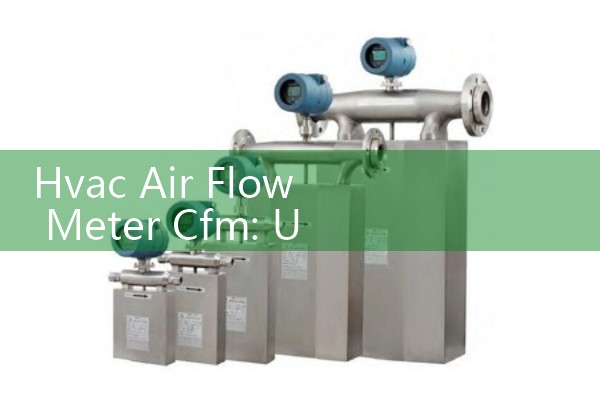
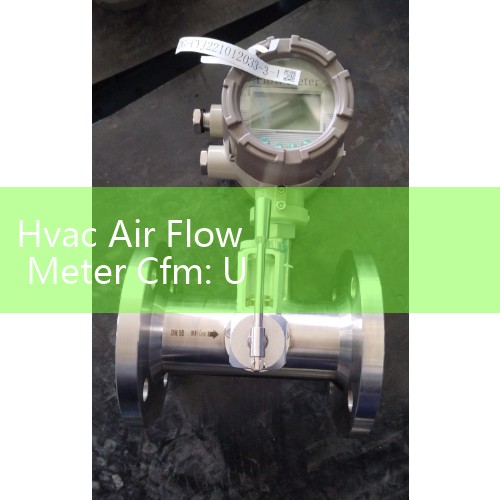
Portable anemometers solve field checks but not permanent monitoring. For compressed air, nitrogen, natural gas, biogas, or combustion air lines, Silver Automation Instruments supplies inline thermal mass flow meters with 4-20 mA HART, RS485 Modbus, and optional pulse output. The meters come in DN15 to DN200 sizes. Common ranges include 0.3 to 150 Nm3/h for compressed air and 0.5 to 200 kg/h for gas. Use them for leak detection, consumption per production line, or outside air monitoring. Unlike a portable vane anemometer, an inline thermal mass meter runs continuously and links to a PLC or energy management system. It also has no moving parts, which helps in dirty air or high vibration areas. We have seen this on customer sites many times. A food plant in the Philippines checked compressed air leaks with a portable unit and then installed a permanent Silver Instruments meter on the main header.
Recommended Instrument Pairing for Duct Balancing Projects
For portable HVAC air flow CFM checks, a hot wire vane anemometer is the right tool. For permanent compressed air or process gas measurement, pair it with a Silver Automation Instruments inline thermal mass flow meter. Example: a paint manufacturer in Southeast Asia uses a handheld hot wire for booth face velocity and an SITF-100 inline meter on a compressed air header at 7 bar. The meter reports 0 to 300 Nm3/h to a local display with 4-20 mA output. This covers both compliance checks and consumption tracking. For larger lines, the SITF-200 series handles DN65 to DN200 with flow up to 800 Nm3/h depending on pipe size and pressure.
FAQ: HVAC Air Flow Meter CFM and Thermal Mass Flow Meters
Q1. What is more accurate for HVAC CFM measurement, a hot wire or vane anemometer?
A hot wire is better below 2 m/s. A vane is better from 2 to 30 m/s. Good instruments have an accuracy of about plus or minus 2 percent of reading plus a fixed offset.
Q2. Can I install a hot wire anemometer permanently in a duct?
Portable hot wire probes are not built for permanent installation. Use an inline thermal mass flow meter from Silver Automation Instruments for continuous output. It works on compressed air, nitrogen, and clean dry air with no moving parts.
Q3. How do I convert m/s to CFM?
CFM equals velocity in feet per minute times duct area in square feet. For metric, m3/h equals velocity in m/s times duct area in m2 times 3600.
Q4. What size thermal mass flow meter do I need for a DN80 compressed air line?
For DN80, choose the SITF-200 series. Send the line pressure in bar, temperature in °C, pipe size DN, and maximum flow range. The factory will configure the meter for 0 to 500 Nm3/h or similar.
Q5. Does Silver Automation Instruments supply portable hot wire vane anemometers?
We focus on inline industrial flow meters and transmitters. For handheld duct balancing we recommend a dedicated HVAC test instrument brand. For permanent gas and air flow measurement we supply thermal mass flow meters, Coriolis mass flow meters, electromagnetic flow meters, ultrasonic flow meters, vortex flow meters, and oval gear flow meters.
Send us your duct size in DN, air or gas type, pressure in bar, temperature in °C, and maximum flow in kg/h or Nm3/h. Tel: +86-25-68650347. WhatsApp: +86-25-52155837. WeChat: +86 15365082610.
 Hot Product
 Related AD